In recent years, consular and diaspora diplomacy have both emerged as important areas in diplomatic studies; governments are becoming more citizen-centric.
Consular diplomacy has gained prominence in many foreign ministries, a dramatic turnaround from its earlier status as a routine activity. This is directly connected with the enhanced role of publics in foreign affairs. Consular diplomacy deals with two sets of people. The first is one’s own citizens, who need travel documents to go overseas, and protection and help while they travel abroad: extradition, emergency assistance, and repatriation. The second group includes foreign citizens who need visas, illegal migrants, and overseas workers.
Migration produces diasporas. Globally, some 215 million people are migrants (i.e. the first generation of those that have gone to foreign countries). Subsequent generations sometimes merge into the local population, but often retain their connections with the home states, over many generations. Today diasporas are active in international affairs. The interconnected areas of providing citizens with consular services, and working with the diaspora, are now priorities in international affairs.
What will you learn?
- Describe the international law basis of consular diplomacy and the elements of consular diplomacy in practice, including the use of honorary consuls.
- Explain and provide examples of how consular diplomacy connects to related subjects, including outreach to a diaspora, migration, labour affairs, services to own citizens working abroad, and emergency management in delivering consular services.
- Effectively organise and plan work at a consular post in a mission abroad, including building relationships with diasporas.
- Explain the importance of diasporas in world and national affairs, and their potential as non-official agents of diplomacy.
- Plan and operationalize a diaspora policy for their own countries and handle outreach to the diaspora in political, economic and public affairs activities.
How will you learn?
In this course you will interact intensively in discussions with classmates and lecturers from around the world. You will receive guidance and personalised feedback on your classwork from the course team.
How long will you learn?
The course lasts for 10 weeks:
- 1 week of course introduction and orientation to online learning
- 8 weeks of addressing the course topics one by one (see below for more details)
- 1 week for the final assignment and completing pending tasks
Who should apply
This course will be of interest to:
- Practising diplomats, civil servants, and others working in international relations who want to refresh or expand their knowledge under the guidance of experienced practitioners and academics.
- Postgraduate students of diplomacy or international relations wishing to study topics not offered through their university programmes or diplomatic academies and to gain deeper insight through interaction with practising diplomats.
- Postgraduate students or practitioners in other fields seeking an entry point into the world of diplomacy.
- Journalists, staff of international and non-governmental organisations, translators, business people and others who interact with diplomats and wish to improve their understanding of diplomacy-related topics.
Overview
The course consists of 8 modules:
- Consular diplomacy: The basics and the operation of consulates: relationship with other segments of diplomacy; increased prominence; the home and foreign dimension of consular diplomacy; link with diaspora diplomacy; different offices that perform related functions. The working of consulates; their role in sub-state diplomacy; mobile posts and virtual outposts; application of technology; role following severance of diplomatic relations.
- The Vienna Convention on Consular Relations (VCCR), and honorary consuls: key provisions and relevance of the VCCR; strengths and limitations; consular functions, facilities, privileges and immunities; consular agreements and other bilateral instruments; honorary consuls and their role; bilateral consular agreements and regional approaches; VCCR and other international instruments.
- Protection of citizens, and visas: the two primary functions of consular diplomacy: the necessity, role and formulation of visa policy; reciprocity and other issues; visa power, visa diplomacy; protection of citizens; nature of citizen services and limitations; labour protection and welfare; disaster relief, piracy, terrorism, repatriation, deportation; responding to new situations.
- Migration and diplomacy: the economics and social circumstances of migration; demographic compulsions; the handling of undocumented aliens, the political, social and other dimensions; world trends; migration as issue in global dialogue and future trends.
- Diaspora diplomacy: the importance of diasporas; home role of diasporas; political, economic and other impact in relationship building; evolution over generation change; best practices; hazards of this form of diplomacy.
- Diasporas and public diplomacy: relevance for public diplomacy in win-win mode; helping country of origin to project interests in countries of adoption; role in the original home state; ‘reverse diplomacy’ used by country of adoption aimed at homeland.
- Diasporas and home states: emerging importance of diasporas; different concepts of diaspora; need for diaspora policies and contours of such policies; organisational structures in states; evolution and implementation of policies; country practices and variations; diaspora organisations; exploring feasibility of a template for diaspora policies.
- Diasporas and economic diplomacy: economic diplomacy, the heart of diplomacy; various facets of economic diplomacy; diaspora, trade and investment promotion; diaspora and development; diaspora and knowledge transfer; diaspora and remittances; diaspora organisations; linking diaspora with home and host countries.
Course lecturers
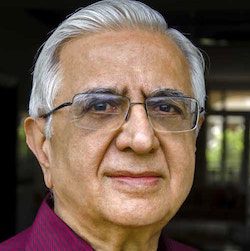
Kishan S Rana
Professor Emeritus, former Indian Ambassador, and a joint secretary to Prime Minister Indira Gandhi
Also of interest
Need more info:
DiploFoundation (attn Tanja Nikolic)
Anutruf, Ground Floor, Hriereb Street Msida, MSD 1675, Malta
Methodology
The Consular and Diaspora Diplomacy online course is based on a collaborative learning approach, involving a high level of interaction over a period of 10 weeks. Reading materials and the necessary tools for online interaction are provided in a virtual classroom.
Each week, participants study and discuss course materials and complete additional online activities. At the end of the week, participants and lecturers meet to discuss the topic of the week. For successful completion, this course requires a minimum of 5 to 7 hours of study time per week.
Participants who successfully complete a certificate course receive a certificate issued by Diplo which can be printed or shared electronically via a permanent link. Participants who successfully complete an accredited course will receive 9 ECTS credits from the University of Malta.
Prerequisites
All course applicants must have regular internet access; dial-up connections are sufficient, but broadband is preferable.
Applicants for certificate courses must have:
- An undergraduate university degree OR 3 years of work experience and appropriate professional qualifications in diplomacy or international relations
- Sufficient English language skills to undertake postgraduate-level studies
Applicants for accredited courses must meet the University of Malta prerequisites:
- Bachelor's degree in a relevant subject with at least Second Class Honours
- Proof of English language proficiency obtained within the last 2 years (minimum requirements: TOEFL paper-based – 650; TOEFL internet-based – 95; IELTS – 6.5.; Cambridge – Proficiency Certificate with Grade C or better). If when applying you are still waiting for your English language proficiency results, the University may issue a conditional letter of acceptance.
Fees and scholarships
Course fees depend on whether you wish to obtain university credit for the course or a Diplo certificate:
- University of Malta accredited courses: €850
- Diplo certificate courses: €690
Note: Diplo alumni can benefit from a 15% discount on the fee for this course.
A limited number of partial scholarships are available for diplomats and others working in international relations from developing countries. Discounts are available for more than one participant from the same institution.
You can apply for this course as:
- A certificate course, in order to obtain a certificate issued by Diplo
- An accredited course, to obtain 9 ECTS credits from the University of Malta
- As part of the Master/Postgraduate Diploma in Contemporary Diplomacy
How to apply
If interested in this course, please contact us at admissions@diplomacy.edu.

 Humanitarian Diplomacy online diploma course