Diplomatic means can transform the smallness of a state into an asset when promoting national and international interests.
This course examines the manner in which small states conduct their diplomacy to pursue their foreign policy objectives and to manage their participation in the global community of nations. The subject takes two aspects as starting premises: that diplomacy as practised by small states is a subset of the basic themes and methods of diplomacy in general; and that small states, however defined, are necessary and active partners in the global community of nations.
What will you learn?
- Provide examples and discuss the implications of different definitions of small states.
- Describe the role of small state diplomacy within the matrix of actions and interests which collectively determine a country’s foreign policy objectives.
- Identify and explain the economic constraints, security threats and environmental vulnerabilities which influence the definition and pursuit of a small state’s foreign policy goals, and the diplomatic methods available to address these.
- Describe the systems of multilateral and regional diplomacy, provide examples, and analyse tactics of groupings for the purpose of negotiation as well as alliances of interest and concern.
- Argue for and defend the important role of small states within the global community of nations.
How will you learn?
In this course, you will interact intensively in discussions with classmates and lecturers from around the world. You will receive guidance and personalised feedback on your classwork from the course team.
How long will you learn?
The course lasts for 10 weeks:
- 1 week of course introduction and orientation to online learning
- 8 weeks of addressing the course topics one by one (see below for more details)
- 1 week for the final assignment and completing pending tasks
Who should apply
This course will be of interest to:
- Practising diplomats, civil servants, and others working in international relations
- Postgraduate students of diplomacy or international relations wishing to gain deeper insight through interaction with practising diplomats
- Postgraduate students or practitioners in other fields seeking an entry point into the world of diplomacy
- Journalists, staff of international and non-governmental organisations, translators, business people, and others who wish to improve their understanding of diplomacy-related topics
Overview
The course consists of 8 modules:
- Introduction to Diplomacy of Small States: We consider the role of small states as members of a set of principal, though not exclusive, actors in the international order. We look at qualitative and quantitative definitions of small states. We analyse the bases of foreign policy choices and diplomatic methods and consider the choices and methods available to small states in the areas of security, development, and status building.
- The Ministry of Foreign Affairs in Small States: We look at how foreign ministries of small states conduct tasks arising from their primary responsibility to help implement the state’s foreign policy; tasks relating to information, representation, protection, and negotiation. We also consider two aspects of the structure of a small state foreign ministry: organisational set-up and human resource management.
- Security: We focus on the central concern of any state’s security, namely the safeguarding of territorial integrity, which is as vital to small states as to larger states. We analyse the various threats to a small state’s territorial integrity (actual, latent, or potential) and examine how the diplomatic process in addressing each is unique.
- Economic Diplomacy: We look at the economic openness to which small states are subject, the linkages between smallness and peripherality, and smallness and low level of development. We examine the resilience of small states to their economic vulnerabilities and the way these vulnerabilities affect their bilateral and multilateral economic diplomacy.
- Environmental Diplomacy: States must take both preventative and remedial action in the face of environmental risks and natural disasters. In environmental concerns, size is the major element of vulnerability. We look at actions being taken by small island states to meet the challenge of long-term effects of such phenomena as ozone depletion and climate change; then the impact of natural disasters such as hurricanes, earthquakes, or tsunamis.
- Multilateral Diplomacy: We look at two separate roots of multilateral diplomacy: the regional process, with geographical proximity as the primary motivating factor, and the broader process resulting from a commonality of interests and concerns. We discuss the small state’s perception of the multilateral process and the assumptions behind this process. We then look at the institutional dimension, including the system of groupings under which different states position themselves for purposes of negotiation and voting.
- Regional Diplomacy: We first consider the factors at work in promoting regional diplomacy. We consider regional arrangements for peace and security, and the role of the UN regional commissions which deal with a broader spectrum of social, economic, and political issues. We then examine the role of small states in regional arrangements in America, Europe, Africa, and Asia.
- Small States and Globalisation: From the perspective of a small state, we examine two aspects of globalisation that fall directly within the domain of diplomacy: the way globalisation affects the role and status of various actors in the international arena, and the way globalisation affects the manner in which states interact with each other.
Course lecturers

Amb. Milan Jazbec
Ambassador, Ministry of Foreign Affairs of Slovenia, and professor of diplomacy
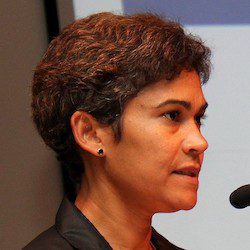
Solange Mike
Associate Faculty Member, Diplo

Victor Camilleri
Former Permanent Representative of Malta to the UN
Also of interest
Need more info:
DiploFoundation (attn Tanja Nikolic)
Anutruf, Ground Floor, Hriereb Street Msida, MSD 1675, Malta
Methodology
The Diplomacy of Small States online course is based on a collaborative learning approach, involving a high level of interaction over a period of 10 weeks. Reading materials and the necessary tools for online interaction are provided in a virtual classroom.
Each week, participants study and discuss course materials and complete additional online activities. At the end of the week, participants and lecturers meet to discuss the topic of the week. For successful completion, this course requires a minimum of 5 to 7 hours of study time per week.
Participants who successfully complete a certificate course receive a certificate issued by Diplo which can be printed or shared electronically via a permanent link. Participants who successfully complete an accredited course will receive 9 ECTS credits from the University of Malta.
Prerequisites
All course applicants must have regular internet access; dial-up connections are sufficient, but broadband is preferable.
Applicants for certificate courses must have:
- An undergraduate university degree OR 3 years of work experience and appropriate professional qualifications in diplomacy or international relations
- Sufficient English language skills to undertake postgraduate-level studies
Applicants for accredited courses must meet the University of Malta prerequisites:
- Bachelor's degree in a relevant subject with at least Second Class Honours
- Proof of English language proficiency obtained within the last 2 years (minimum requirements: TOEFL paper-based – 650; TOEFL internet-based – 95; IELTS – 6.5.; Cambridge – Proficiency Certificate with Grade C or better). If when applying you are still waiting for your English language proficiency results, the University may issue a conditional letter of acceptance.
Fees and scholarships
Course fees depend on whether you wish to obtain university credit for the course or a Diplo certificate:
- University of Malta accredited courses: €850
- Diplo certificate courses: €690
Note: Diplo alumni can benefit from a 15% discount on the fee for this course.
A limited number of partial scholarships are available for diplomats and others working in international relations from developing countries. Discounts are available for more than one participant from the same institution.
You can apply for this course as:
- A certificate course, in order to obtain a certificate issued by Diplo
- An accredited course, to obtain 9 ECTS credits from the University of Malta
- As part of the Master/Postgraduate Diploma in Contemporary Diplomacy
How to apply
Fill out the short form to start your application process for this course. You will receive an instruction email on how to continue.
Applying for financial assistance? Please indicate this on the application form, upload your CV, and a motivation statement that should include:
- Details of your relevant professional and educational background
- Reasons for your interest in the course
- Why do you feel you should have the opportunity to participate in this course? How will your participation benefit you, your institution and/or your country?
Please note that financial assistance from Diplo is available only to applicants from developing countries!
Late applications will only be considered if there are spaces available in the course.
Apply for a University of Malta accredited course
Complete application packages must be received by specified application deadlines in order to be considered.
- Two copies of the University of Malta application form filled out in full
- Certified copies of original degree(s) and official transcripts
- English translations of degree(s) and transcripts if they are not in English, signed and stamped by a translator
- English language proficiency certificate obtained within the last two years (minimum requirements TOEFL paper-based – 650; TOEFL internet-based – 95. IELTS – 6.5.; Cambridge – Proficiency Certificate with Grade C or better). Please indicate on the application form if you are still waiting for your English language proficiency results
- Photocopy of personal details pages of your passport
- If you are requesting financial assistance, please include your CV and a motivation letter with your application. The motivation letter should include details of your relevant professional and educational background; reasons for your interest in the course; and why you feel you should have the opportunity to participate in this course (i.e. how will your participation benefit you, your institution and/or your country). Financial assistance from DiploFoundation is available only to applicants from developing countries.
- Application fee or proof of payment (€100, non-refundable – see methods of payment).
Please send the complete application package by email to admissions@diplomacy.edu or by post to:
DiploFoundation
Anutruf, Ground Floor
Hriereb Street
Msida, MSD 1675, Malta
Please note that by sending your application package, you are confirming that you have read Diplo's Privacy Policy. Please note that Diplo will process and share your personal data with third parties (including the University of Malta) for admissions and academic matters, administering finance, and administrative purposes in accordance with the Privacy Policy.
Cancellation policy
Diplo reserves the right to cancel this course if enrolment is insufficient. In case of cancellation, Diplo will notify applicants shortly after the application deadline. Applicants who have paid an application fee may apply this fee towards another course or receive a refund.


 Cybersecurity for South-Eastern Europe online course